
- Duration: 14.5
- Max Capacity: 50
- Schedule: 7:00 AM
Alabama Civil Rights Experience / Day Tours from Atlanta GA
Pennyman Tours / Freedom Rides
“Teaching Black History One Bus Ride At A Time”…
Day Tours from Atlanta to Montgomery & Selma AL
Itinerary
From $0,000 per person + air
Single Supplement $000
TOUR HIGHLIGHTS
Walk the Edmund Pettus Bridge / Selma AL
The Rosa Parks Freedom Route / Montgomery AL
The Legacy Museum / Montgomery AL
The Memorial for Peace & Justice (Lynching Memorial) / Montgomery AL
The Freedom Sculpture Park / Montgomery AL
The Dexter Avenue King Memorial Baptist Church / Montgomery AL
The Civil Rights Memorial Center / (Southern Poverty Law Center)
Day Tour Freedom Ride to Alabama
7:00am (Eastern) Depart for Selma AL
Lowndes County Interpretive Center
The Selma to Montgomery National Historic Trail traces the path taken by the three voting rights marches from Selma to Montgomery in 1965. The trail follows public roads through the City of Selma, Lowndes County, and the City of Montgomery. Here you can learn about the city's role in the Civil Rights Movement and the sites made famous that still exist today.
Walking the Edmund Pettus Bridge (Selma AL)
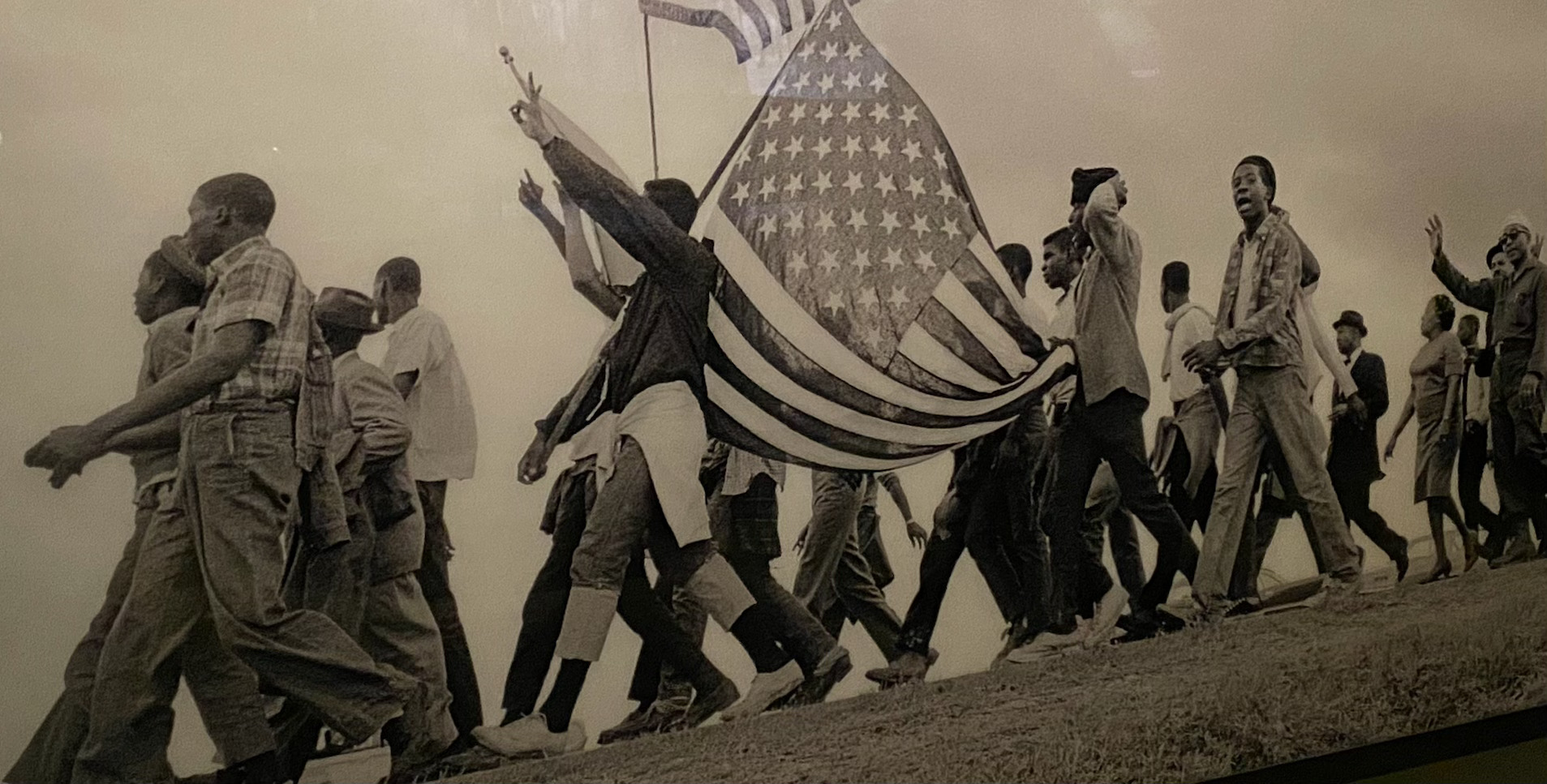
The Selma-to-Montgomery March for voting rights ended three weeks--and three events--that represented the political and emotional peak of the modern civil rights movement. On "Bloody Sunday," March 7, 1965, some 600 civil rights marchers headed east out of Selma on U.S. Route 80. They got only as far as the Edmund Pettus Bridge six blocks away, where state and local lawmen attacked them with billy clubs and tear gas and drove them back into Selma. Two days later on March 9, Martin Luther King, Jr., led a "symbolic" march to the bridge. Then civil rights leaders sought court protection for a third, full-scale march from Selma to the state capitol in Montgomery.
Depart for Montgomery AL
Legacy Museum / Panni George’s (Lunch On Group)
Legacy Museum
On the site of a cotton warehouse where enslaved Black people were forced to labor in bondage, the Legacy Museum tells the story of slavery in America and its legacy through interactive media, first-person narratives, world-class art, and data-rich exhibits.
National Center for Peace & Justice (Lynching Memorial)
On a hilltop overlooking Montgomery is the nation’s first comprehensive memorial dedicated to the legacy of Black Americans who were enslaved, terrorized by lynching, humiliated by racial segregation, and presumed guilty and dangerous.
More than 4,400 Black people killed in racial terror lynchings between 1877 and 1950 are remembered here. Their names are engraved on more than 800 corten steel monuments—one for each county where a racial terror lynching took place—that form the main structure of the memorial at the heart of this six-acre site.
Freedom Monument Sculpture Park
At this 17-acre site along the very river where tens of thousands of enslaved people were trafficked, breathtaking art and original artifacts invite an immersive, interactive journey and provide a unique view into the lives of enslaved people.
Listen to Muscogee family stories as they were told centuries ago on this very spot. Step inside a train car like those used to traffic enslaved people to Montgomery as you hear trains pass on nearby tracks originally laid by enslaved people. Stand before an authentic dwelling inhabited by enslaved people and marvel at sculptures created from bricks made by enslaved artisans.
Driving Tour Downtown Montgomery
Rosa Parks Route / Dexter Avenue King Memorial Baptist Church
Civil Rights Memorial Center / Alabama State Capitol Building
9:30pm (Central) Arrival in Atlanta GA
Think of it as a Saturday Academy to Learn Black History aboard Our Rolling Classroom…
“The Power of History is in Telling the Truth”…
The Alabama cities of Montgomery and Selma all had successful campaigns that helped remove the segregated barriers that were in place for almost a 100 years.
The Jim Crows walls came tumbling down in the South.
You can see the Edmund Pettus Bridge in many pictures and videos, but the feelings you get from walking the bridge, knowing the fear the marchers had in seeing the State Troopers lined up on the other side.